
Thermal bridge calculation is one of the key components of modern building design, ensuring that a building performs optimally from a thermal and energy-efficiency perspective. Thermal bridges are structural junctions or material transitions where heat escapes more easily than through surrounding surfaces, potentially leading to increased energy loss, condensation, and mould growth.
The goal of our service is to analyze and optimize every critical junction through detailed thermal simulations, ensuring high energy performance, durability, and a healthy indoor environment.
Neglecting thermal bridges — whether during design or construction — is one of the most common reasons why a building fails to achieve its expected energy performance. These areas not only increase heat loss, but can also reduce internal surface temperatures, resulting in condensation and mould formation.
Thermal bridge calculations make it possible to:
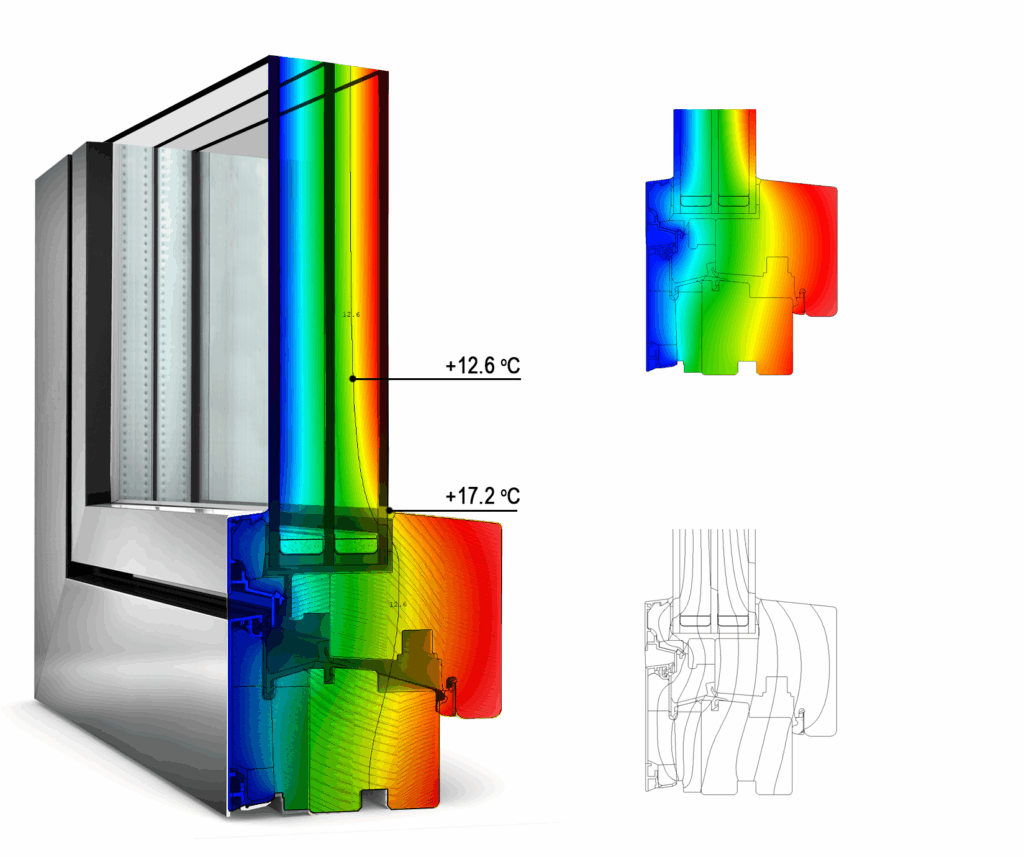
We use advanced, internationally recognized thermal simulation software capable of accurately modelling the geometry, materials, and thermal conductivity properties of each construction detail.
Selection of Critical Junctions – Based on the architectural and structural documentation, we identify the junctions requiring detailed analysis.
Data Input – Material properties, layer compositions, and geometric dimensions are defined within the simulation model.
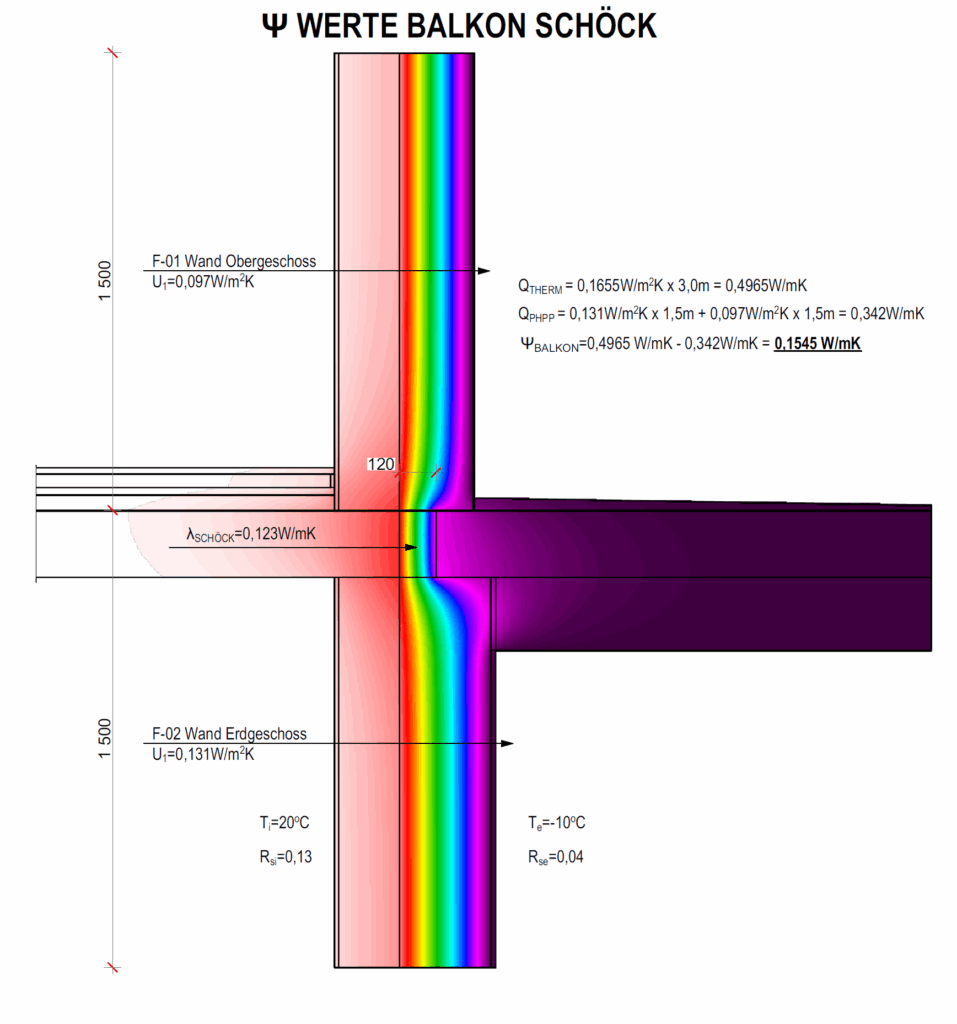
Thermal Simulation – We evaluate internal surface temperatures, the temperature factor (fRsi), and the linear thermal transmittance coefficient (Ψ-value).
Optimization – We provide recommendations for improving the detail — such as material modifications, insulation adjustments, or window positioning — to achieve optimal thermal performance.
Documentation – We prepare construction-ready detail drawings, Ψ-value and fRsi verification documents, and condensation risk assessments.
Reliable Energy Performance – Pre-optimized, thermal bridge-minimized junctions ensure predictable building performance.
Reduced Construction Risks – Clear technical guidance minimizes the likelihood of incorrect structural detailing during construction.
Increased Durability – Proper fRsi values and optimized surface temperatures help prevent condensation and mould formation.
Compliance with Strict Standards – Suitable for both Passive House and low-energy building requirements.
Detailed, Construction-Ready Documentation – Precise technical solutions that provide practical support during construction.
Comprehensive design of Passive House and low-energy buildings.
Energy-efficiency assessments and optimization recommendations.
Integrated coordination of all design disciplines under one management process.
Pre-purchase site assessments, design reviews, and professional support for repositioning problematic projects.
The linear thermal transmittance coefficient; it indicates how much additional heat loss is caused by a specific construction junction or connection detail.
The surface temperature factor; if the value is too low, the risk of condensation and mould growth increases significantly.
Typical critical areas include plinth connections, window installation junctions, balconies and cantilevered structures, ring beams, and roof edge details.
Because well-executed thermal bridge calculations help reduce energy costs, increase the building’s durability, and create a more comfortable indoor living environment.

This website was created with the support of the Demján Sándor Program.
© 2026 V2 Építésziroda. All rights reserved. All textual and visual content on this website is the intellectual property of the author and may only be copied or used with prior written permission.