
PHPP Calculations

The Foundation of Passive House Design

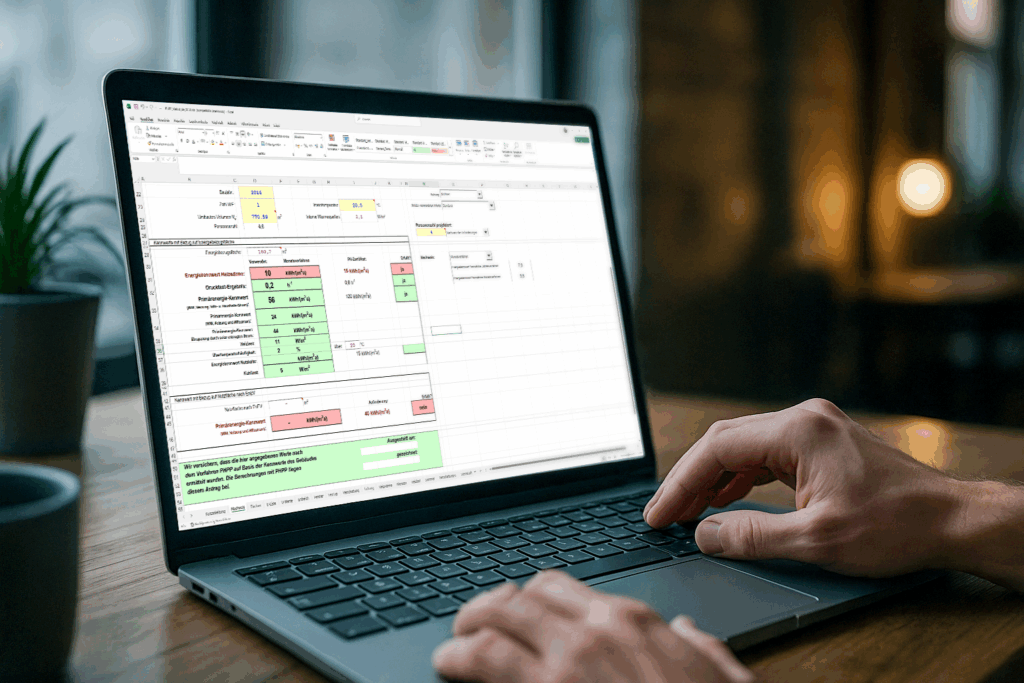
PHPP (Passive House Planning Package; in German: Passivhaus Projektierungspaket) is a highly detailed calculation system consisting of nearly 40 interconnected worksheets, developed by the Passive House Institute. It forms the foundation of Passive House and low-energy building design, enabling highly accurate prediction and optimization of a building’s energy performance.

PHPP requires the input of all essential building data, including:
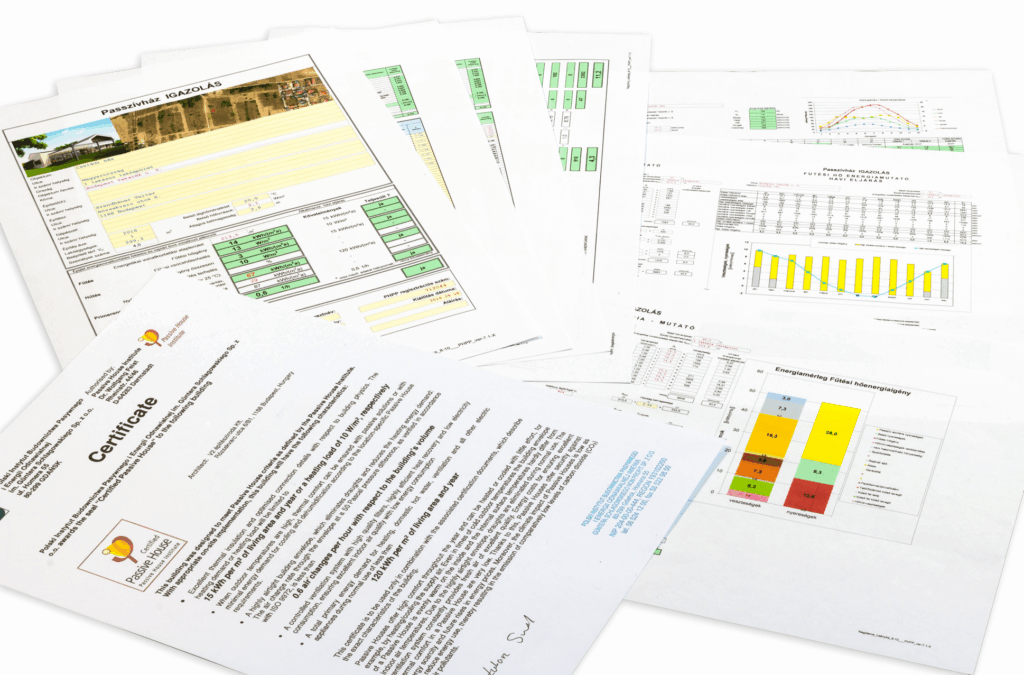
  • geometric characteristics of the building,
  • applied materials and construction assemblies,
  • thermal bridges and foundation solutions,
  • building systems and their technical parameters,
  • windows and glazing systems,
  • shading solutions,
  • room-specific data and solar exposure conditions,
  • detailed local climate and weather data for the project location.
PHPP Verification

The Definition of a Passive House

“A Passive House is a building in which thermal comfort (ISO 7730) can be achieved solely by post-heating or post-cooling the fresh air volume required to maintain adequate indoor air quality (DIN 1946), without the need for additional recirculated air.”

(Dr. Wolfgang Feist)
Why Are PHPP Calculations Essential for Passive Houses?

  • Realistic Energy Modelling – PHPP can predict the building’s actual energy demand with exceptional accuracy.
  • Consistent Design Development – The impact of every structural or mechanical modification on the building’s overall performance can be continuously evaluated throughout the design process.
  • Foundation of Certification – For certified Passive Houses, PHPP calculations are a mandatory part of the official certification process.
  • Highly Valuable for Low-Energy Buildings as Well – Although not mandatory outside Passive House certification, PHPP is strongly recommended due to its precision and reliability.
PHPP Calculation

Why Choose V2 Építésziroda for PHPP Calculations?

  • Reliable Energy Performance – Detailed PHPP modelling and comprehensive data input provide an accurate prediction of the building’s expected energy consumption.
  • Extensive Experience – PHPP modelling for multiple certified and certification-ready Passive House projects.
  • Reliable Design Foundation – The results can be directly integrated into the design process, ensuring that energy targets are already achieved at the planning stage.
  • Optimized Investment Costs – The modelling process helps identify cost-effective construction assemblies and building systems while avoiding unnecessary oversizing.
  • Long-Term Value – Precise energy planning ensures lower operating costs and a comfortable indoor environment throughout the building’s lifecycle.

Related Services

Passive House Design

Comprehensive design of Passive House and low-energy buildings.

Thermal Bridge Calculations

Thermal optimization of critical construction junctions and details.

Building Energy Consultancy

Energy-efficiency assessments and optimization recommendations.

Architectural Design and General Planning

Integrated coordination of all design disciplines under one management process.

Frequently Asked Questions

It is not mandatory, but due to its accuracy, it may be strongly justified and beneficial.

It provides detailed information about heating and cooling demand, primary energy demand, overheating frequency, and comfort indicators. The impact of changes in insulation materials, layer thicknesses, thermal bridge solutions, or mechanical systems becomes immediately visible in the calculation results.

Building geometry, construction assemblies, windows and glazing systems, thermal bridges, building services parameters, and local climate data.

As early as possible, so that the key design decisions can still be optimized in a cost-effective manner.